
Visit Our Retina Center in Dalton, GA
Our expert retina specialists and surgeons provide exceptional care for the full spectrum of retinal, macular, and vitreous disorders, including age-related macular degeneration (AMD), diabetic retinopathy, retinal tears and detachments, and more. Our retina center in Dalton, GA is conveniently accessible to patients from several local communities, including Chatsworth, Lafayette, Rocky Face, and beyond.
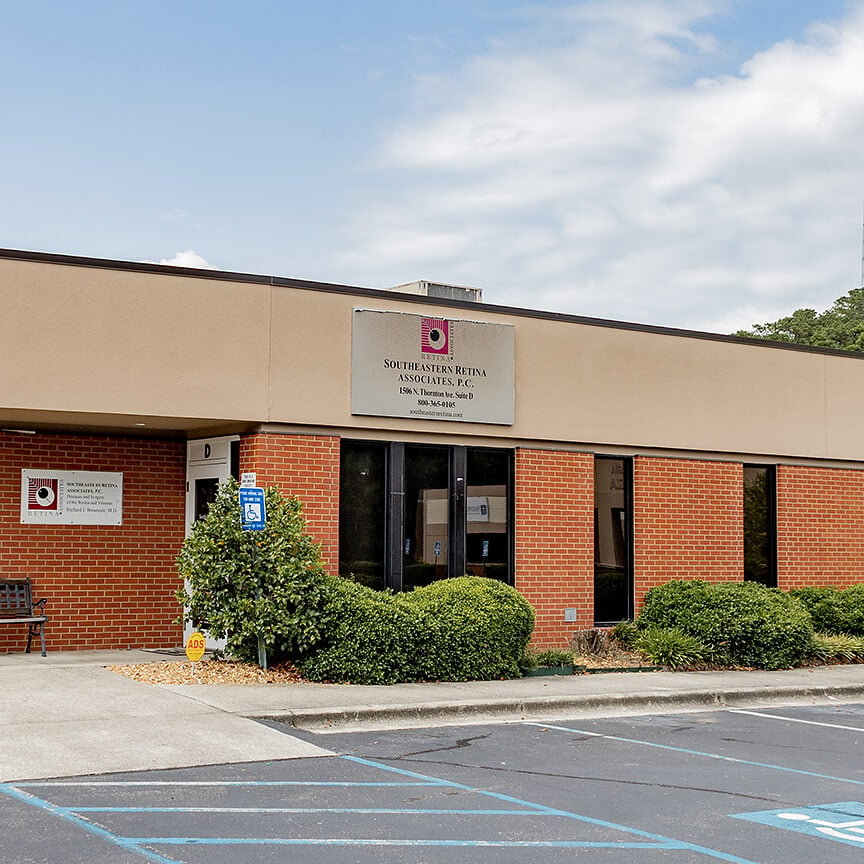
Address
1506 N Thornton Avenue, Suite D
Dalton, GA 30720
Contact Us
Phone: 423-756-1002
Fax: 423-756-1004
Conditions We Treat
Diabetic retinopathy is a complication of diabetes that occurs when high blood sugar damages blood vessels in the retina. In its early stages, the condition may cause few or no noticeable symptoms, but it can lead to vision changes and vision loss as it progresses. Our retina specialists diagnose and manage all stages of diabetic retinopathy using treatments such as intravitreal injections and laser therapy when appropriate.
Age-related macular degeneration (AMD) affects the macula, the central portion of the retina responsible for sharp, detailed vision. Both dry and wet AMD can cause progressive changes in central vision, while advanced dry AMD may develop into geographic atrophy (GA). Although AMD-related vision loss can't always be reversed, early diagnosis, ongoing monitoring, and treatments for certain forms of the disease can help preserve vision and slow progression.
Several conditions can affect the macula and interfere with the clear, central vision needed for activities such as reading, driving, and recognizing faces. Our retina specialists diagnose and treat macular holes, macular puckers (epiretinal membranes), macular edema, and other disorders affecting this important part of the retina. Treatment depends on the condition and its severity and may include monitoring, medication, intravitreal injections, or surgery.
Floaters may look like spots, specks, or strands drifting through your vision, while flashes often appear as brief bursts or streaks of light. These symptoms commonly develop as the vitreous gel inside the eye changes with age. However, a sudden increase in floaters or flashes can sometimes indicate a retinal tear or detachment and should be evaluated promptly by a retina specialist.
A retinal detachment occurs when the retina separates from the tissue beneath it, preventing it from functioning normally. Symptoms can include a sudden increase in floaters, flashes of light, or a shadow or curtain across part of your vision. Retinal detachment is a medical emergency that can cause permanent vision loss without prompt treatment. Depending on the type and severity of the detachment, treatment may include laser therapy, pneumatic retinopexy, scleral buckle surgery, or vitrectomy.
Intravitreal injections deliver medication directly into the vitreous, the gel-like substance inside the eye. These injections are commonly used to treat retinal conditions that cause abnormal blood vessel growth, leakage, or swelling, including wet AMD, diabetic macular edema, and retinal vein occlusion. Our retina specialists use intravitreal medications, including anti-VEGF therapies and corticosteroids when appropriate, to help control disease activity and protect vision.